Author

Benjamin Grunwerg

02/05/2023
,

What is a Usuba?

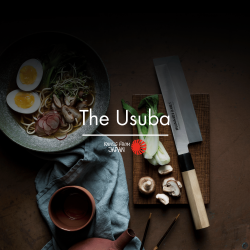
A Usuba knife is a traditional Japanese vegetable knife that is specifically designed for precision cutting and chopping of vegetables. It is characterized by its straight edge and a tall, rectangular blade profile. Often confused with the Nakiri, there are some features that set the Usuba apart. Usuba knives are typically single-bevelled, meaning they have a flat side and a bevelled side. The single-bevel design allows for extremely precise cuts and enables chefs to create thin, consistent slices of vegetables. The tall blade height provides ample space for the knuckles... Read More
16/03/2023
, ,

What is Knife Thinning?

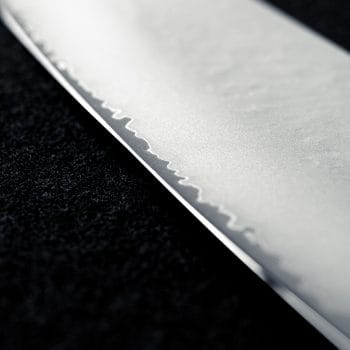
Knife thinning is exactly what you would think, it is the process of thinning the profile of your knife. Now how is this different to sharpening your knife? When you sharpen your knives you focus on the cutting edge of the blade but a sharp edge is just the first step to a high performing blade, the initial cut comes from the edge however we need to take into consideration the thickness of the material behind that edge. The thicker the knife, the more resistance it will encounter in the... Read More

02/03/2023

What is a Gyuto knife?

The Gyuto is a Japanese version to the western Chef’s knife that usually has a blade length of 180-300mm. The name ‘Gyuto’ literally translates to ‘Cow blade’ and as the name suggests, was originally used for large cuts of meat like beef however has since become known as an all-rounder in the kitchen. How to pronounce Gyuto? We’ve all been there, I’ve certainly been there and still mispronounce it every now and then. Gyuto is pronounced ‘G-You-Toe’ (pronounced just like ‘you’ but with a hard ‘G’ sound at the beginning)... Read More

23/02/2023

What is a Santoku Knife?

The Santoku is an all-purpose knife and is a Japanese version of the western Chefs knife. Santoku translates to ‘three virtues’ however the jury is out on what those virtues are, some say it is referring to the ingredients the knife is used for; fish, meats, and vegetables, while others say it is all about the three cutting styles the knife is known for; mincing, slicing, and chopping. Santoku knife Anatomy The Santoku is characterised by its squared shape with a mostly straight edge curving up slightly at the tip... Read More

17/01/2023

What Is A Nakiri Knife?

“Look at that! A mini Cleaver!” Not quite. It may have similar features to a cleaver at first glance, what you are actually seeing is a Nakiri. The Nakiri is a Japanese knife with a straight edge that is commonly used for vegetable preparation. The straight edge of the Nakiri is optimised for an up-down chopping motion and is perfect for the slicing and dicing of vegetables, it is especially useful when julienning vegetables. The straight, symmetrical edge of the Nakiri means it will cut through to the chopping board... Read More

31/10/2022

Say hello to the Masahiro Chinese Chef Knife range! – New at Knives From Japan!

The Masahiro brand is known world wide as one of the three M’s. Along with Misono & Masamoto brands, these are the most respected and prominent brands in Japan. Especially known for their excellent cutlery manufacturing in the past. Why is this important? In todays market there are a lot of so called Japanese knife brands on the market (mainly coming out of China ) some of which are not Japanese at all. Being one of the three M’s not only distinguishes the brand but also sets it apart from... Read More

11/10/2022

Masahiro Pure Carbon – New at Knives From Japan!

The Masahiro brand is known world wide as one of the three M’s. Along with Misono & Masamoto brands, these are the most respected and prominent brands in Japan. Especially known for their excellent cutlery manufacturing in the past. Why is this important? In todays market there are a lot of so called Japanese knife brands on the market (mainly coming out of China ) some of which are not Japanese at all. Being one of the three M’s not only distinguishes the brand but also sets it apart from... Read More

26/05/2020

What is Carbon Steel?

Carbon steel is steel with minimal alloying. Typically ‘stainless steel’ is mixed with nickel or chromium to make it stainless and resistant to rust, but these alloys are only mixed in with the iron, there is no chemical bonding between the different elements. These elements will clog up whetstones during sharpening. Carbon steel is essentially steel without these elements mixed in. Carbon steel knives that are heat treated effectively are capable of the highest levels of sharpness whilst being generally easier to sharpen and are beloved by chefs in heavy... Read More

08/05/2020

Flutes in the Blade

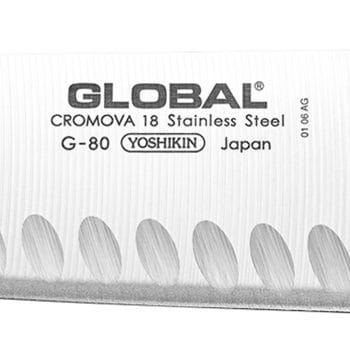
We get asked quite often, what the flutes in the blades are for. Really they are designed to stop food sticking to the blades. Do they work? So, so. You will find flutes mainly on foods designed for chopping vegetables, which can be quite starchy. Global 18cm Fluted Santoku Knife Is there a downside? Well in short yes. Grooves on new knives are initially not a problem, but if the knives are used in heavy use settings, where the knives need to be sharpened often, once the metal is ground... Read More

10/04/2020

A Guide to Knife Grinds

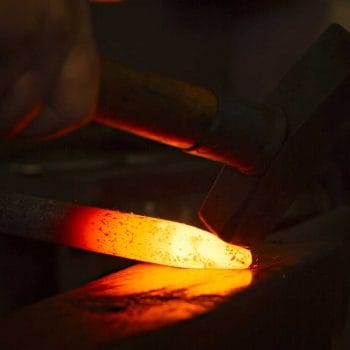
Different brands of knives use different kinds of grind. Flat or V Grinds Very common on Japanese knives, simply both sides of the knife extend down towards the edge of the blade at a common angle. Flat grinds can produce very sharp edges, and are wonderful at making very thin slices. More common than true flat grinds are double bevel grinds, which have an initial shallower grind before being finished with a secondary bevel. As the edge finishes at a microscopic point, flat edges will dull more quickly than other... Read More