
Japanese Pocket Knives – The History & Craftmanship

Japanese knives are known around the world for their exceptional sharpness, craftsmanship and attention to detail. While Japanese kitchen knives receive much of the attention, Japan also has a fascinating tradition of pocket knives and folding knives.
From the simple and historic Higonokami to the highly refined handmade knives of Yoshimi Kotoh, Japanese pocket knives come in many forms. Some were created as practical working tools, while others have developed into highly collectible examples of Japanese craftsmanship.
In this article, we look at three very different Japanese pocket knives: Nagao Kanekoma Higonokami knives, Yoshimi Kotoh folding knives and Miyamoto Musashi pocket knives. We explore where they came from, what they were designed for and why this simple style of folding knife has remained part of Japanese knife-making culture.
Why Did Pocket Knives Become Popular in Japan?
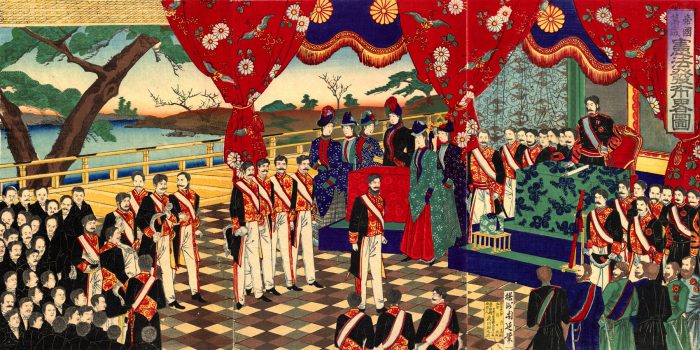
During the 19th Century, the Meiji Restoration of 1868 brought enormous changes to Japanese society, marking the return of the Japanese emperor to a position of power for the first time in more than 500 years. As Japan modernised, the old samurai system was gradually dismantled.
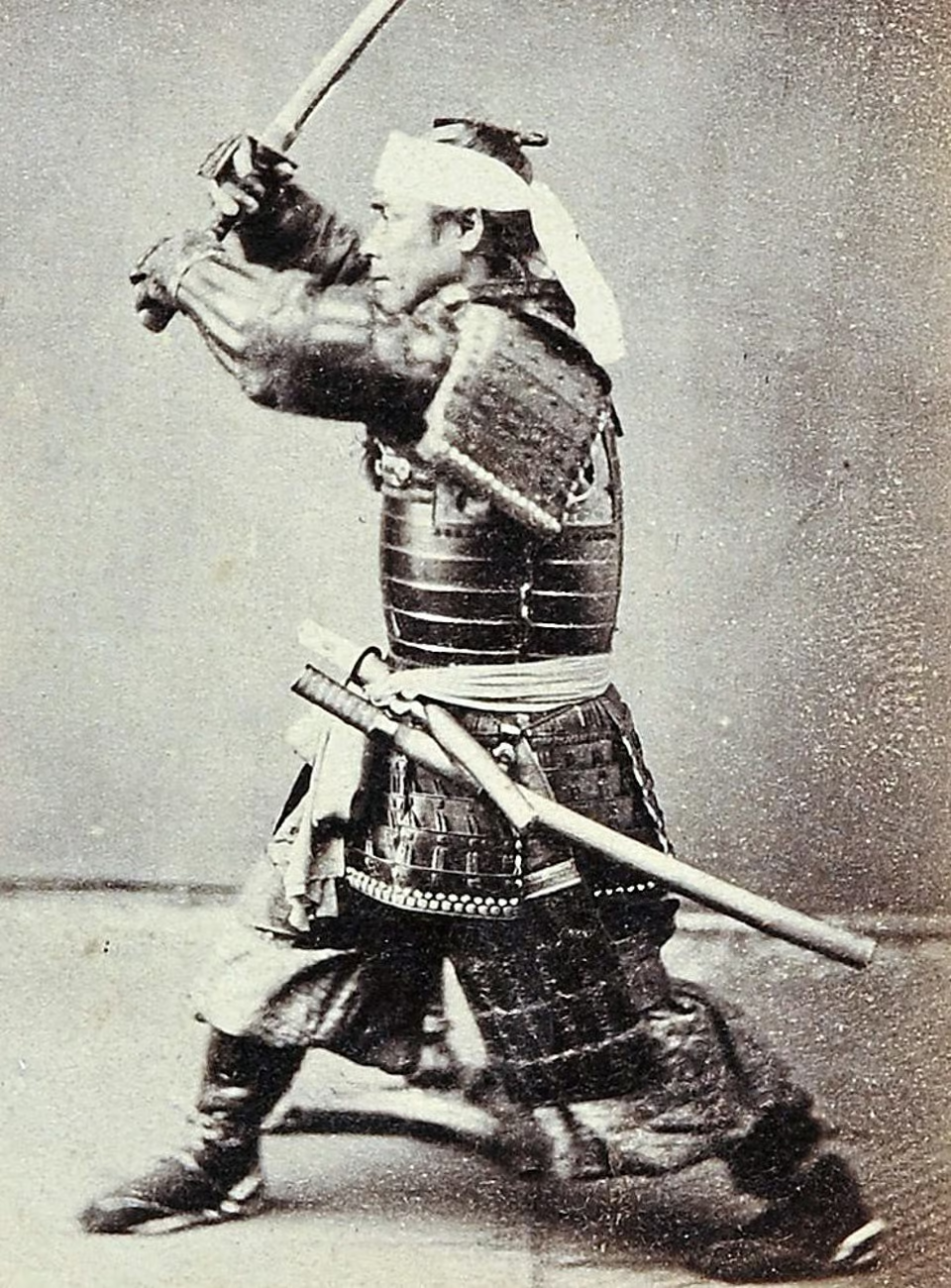
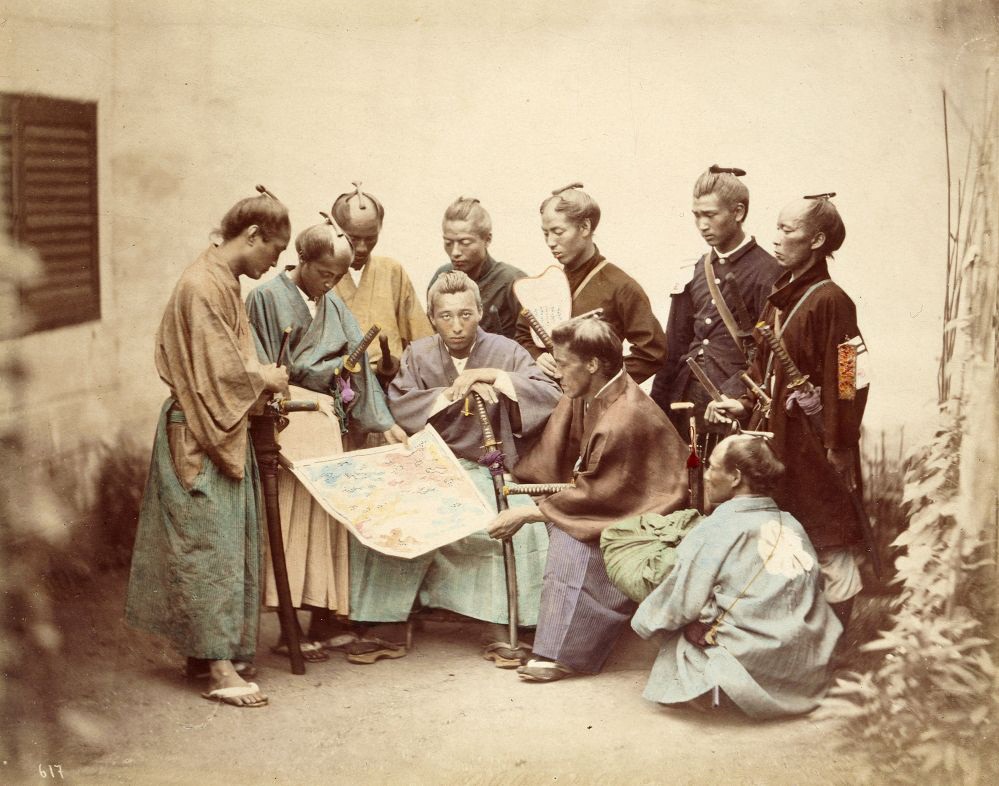
In 1876, the government introduced the Haitōrei, a mandate that prohibited people from wearing swords in public, with exceptions for military and police personnel. This ended the traditional public display of Samurai status. The government wanted to create a modern national army, meaning it could not allow a private warrior class to hold separate military power. They also wanted Japan to look “civilised” to Western nations instead of being viewed as outdated and medieval.
For generations, swordsmiths had made their living producing swords and other bladed tools. As demand for samurai swords declined, many craftsmen had to find new ways to use their skills. In traditional knife-making centres such as Miki City in Hyogo Prefecture, blacksmiths began producing smaller, practical tools and knives instead.
This changing industry helped create the conditions for the development of the Higonokami in the 1890s.
From Samurai Swords to Pocket Knives
The Higonokami was a simple folding knife designed around the skills Japanese craftsmen already possessed. Instead of producing an expensive sword, a blacksmith could use similar knowledge of forging, grinding and sharpening to create a small and affordable everyday tool.
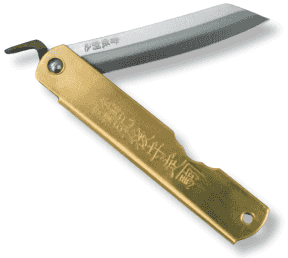
The design was particularly straightforward. A thin blade folded into a simple metal handle, while the distinctive chikiri (the small lever extending from the back of the blade) allowed the user to open the knife and control it securely while cutting.
There was no complicated locking mechanism, spring or collection of separate tools. It was simply a sharp, lightweight and inexpensive cutting tool. This simplicity was a major part of its appeal. Farmers, tradespeople, craftsmen and other workers could use a pocket knife for everyday cutting, carving and practical jobs. The knives were affordable enough to become widely accessible, while Japanese carbon steels gave them the ability to take and maintain a very sharp edge.
The Higonokami therefore became more than just a replacement for the swordsmith’s traditional trade. It became an example of how Japanese craftsmen adapted their skills to a rapidly changing society.
Why Were Japanese Pocket Knives So Simple?
Traditional Japanese pocket knives were not designed around the modern idea of an everyday-carry knife with clips, locks and multiple functions. Instead, they were made to be practical, reliable and easy to maintain. A traditional friction folder has very few moving parts, making it easy to manufacture and maintain. The carbon steel blade can also be sharpened repeatedly, extending the useful life of the knife.
The historic Nagao Kanekoma Higonokami remains remarkably close to its original concept, while makers such as Yoshimi Kotoh have taken the friction-folder design in a more refined, handmade direction.
What Happened to Japanese Swordmaking?
The decline of the samurai did not mean that Japanese swordmaking disappeared completely. Although the 1876 sword-carrying restrictions greatly reduced the traditional role of the sword, skilled craftsmen continued to preserve swordmaking techniques. The situation became even more complicated after the Second World War, when the Allied occupation authorities placed severe restrictions on Japanese swords. Modern Japanese swordmaking was eventually permitted under strict regulations designed to preserve traditional craftsmanship while preventing swords from becoming mass-produced weapons.
Today, licensed Japanese swordsmiths operate under the Firearms and Swords Control Law (Jūtōhō) and must follow strict requirements. A swordsmith must undergo a 5-year unpaid apprenticeship, use traditional methods and are only allowed to use Tamahagane steel, made from iron sand melted with charcoal.
Every completed sword is registered individually as cultural objects. As of now, a licensed swordsmith is generally permitted to make no more than 2 long swords (Katana) or 3 shorts swords (tanto) per month. The pocket knife did not replace the katana, but it represents one way Japanese blacksmiths adapted centuries of blade-making knowledge to a new era.
From Practical Tool to Collectable
The Japanese pocket knife has changed considerably since the late 19th century. The original appeal was largely practical: a small, sharp and affordable tool that could be carried and used for everyday work. Today, that practicality remains, but there is another reason people are drawn to these knives: their craftsmanship and history. Traditional pocket knives are rapidly becoming a collector’s item due to its rarity of true artisan products. Since the pocket knives are forged by hand, supply is limited, creating a deep appreciation among collectors.
Now that we have explored the history, let’s look at three different, highly sought after handmade Japanese pocket knives:
1.Nagao Kanekoma Higonokami is one of the best-known traditional Japanese pocket knives, preserving the simple friction-folder design that originated in Miki, Japan, in the late 19th century.
2.Yoshimi Kotoh knife demonstrates what an individual craftsman can achieve with the same basic friction-folder concept, using carefully selected woods, high-performance steels and hand-finished construction.
3.Miyamoto Musashi knives take the traditional folding knife in another direction, combining the pocket knife format with imagery associated with one of Japan’s most famous swordsmen.
Together, they demonstrate why Japanese pocket knives are so interesting and represent the way Japanese craftsmen adapted, preserved and developed their skills as Japan changed.
1. Nagao Kanekoma and the Higonokami

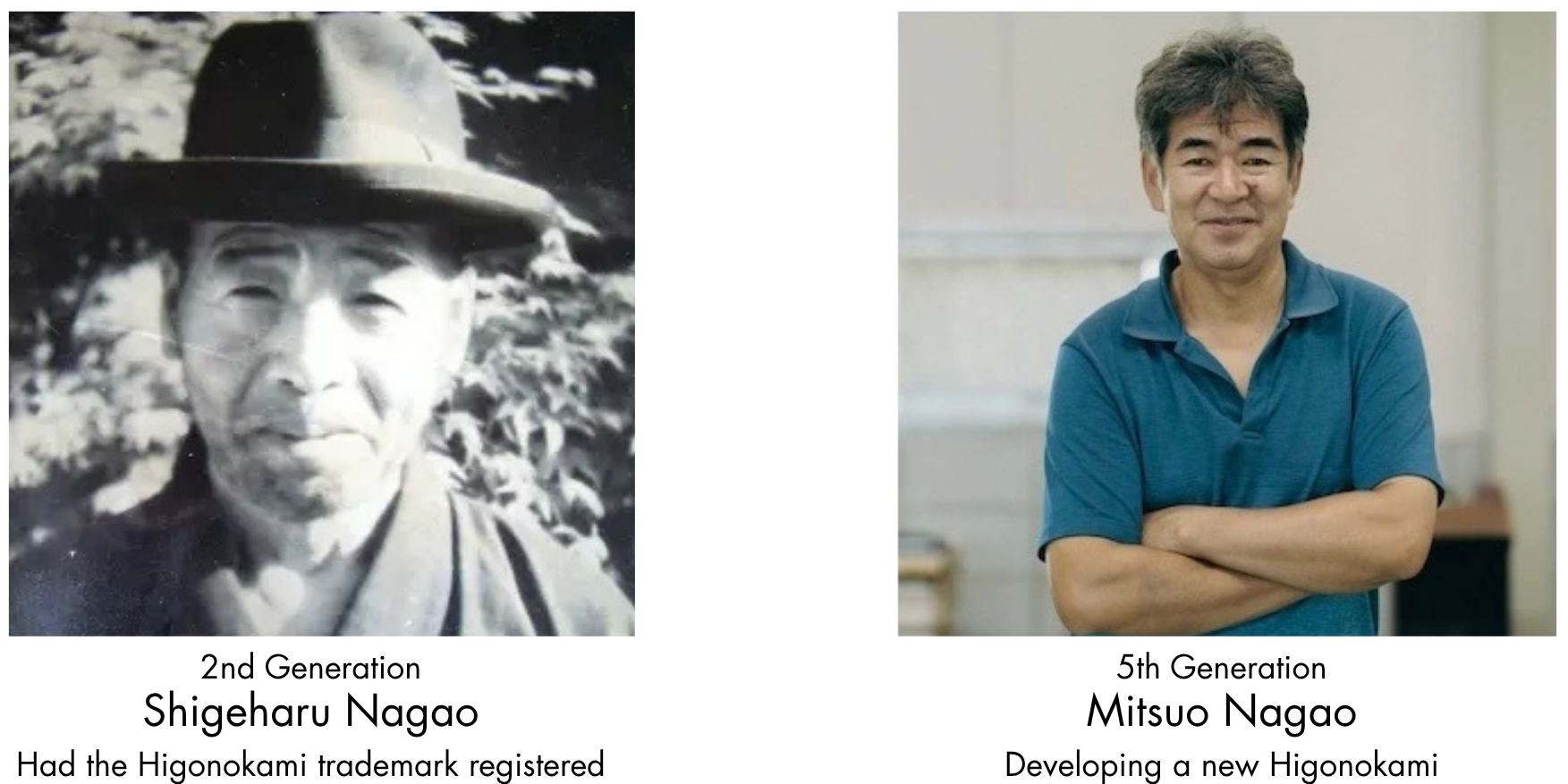
Founded in 1894 in Miki City, Hyogo Prefecture, Nagao Kanekoma is a fifth-generation family workshop and the sole remaining producer of the authentic Higonokami folding pocket knife. Originally established by Komataro Nagao, the company has passed through five generations, with Mitsuo Nagao continuing the tradition of handcrafting these iconic knives today.
What does “Higonokami” mean?
The Higonokami (肥後守), meaning “Lord of Higo,” is an ancient samurai title honoring the former Higo Province (modern-day Kumamoto Prefecture). Though Nagao Kanekoma is based in Miki City—Japan’s blacksmithing capital—the knife was named after the Higo region because it became the primary market for these tools during the late 19th century. For decades, this knife was a cultural staple in Japan. Before the 1960s, nearly every Japanese schoolchild carried a Higonokami in their pocket to sharpen pencils, slice fruit, and carve toys.
The Nagao trademark
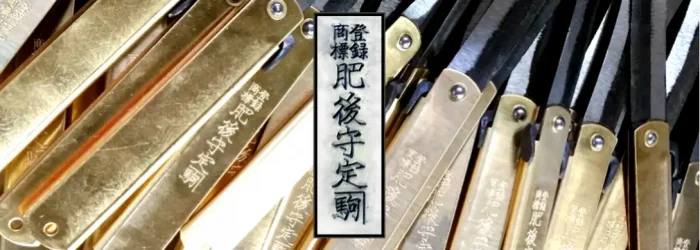
Because of the knife’s historical success, many workshops began replicating the design. However, Nagao Kanekoma is the exclusive legal holder of the Higonokami trademark. This makes them the only workshop permitted to stamp the genuine “Higonokami” name onto their handles.
Anatomy of the blade
The Higonokami is a traditional Japanese friction folder recognised by its simple design and distinctive chikiri thumb lever. Unlike modern locking knives, the Higonokami has no spring or locking mechanism. The blade is opened using the chikiri and is held securely in use by the pressure of your thumb. Each knife is made using high-quality Japanese steels, including Aogami (Blue Paper Steel) from Hitachi, renowned for its outstanding edge retention, sharpness and ease of sharpening.
Today, every Nagao Kanekoma knife represents more than 130 years of Japanese craftsmanship, preserving one of Japan’s most iconic pocket knife designs for a new generation.
2. Yoshimi Kotoh
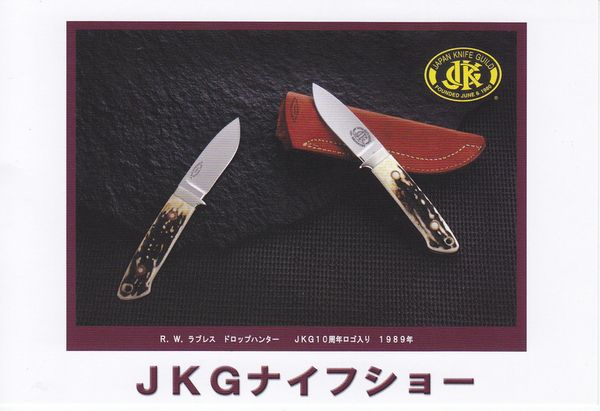
Based in Fukuoka Prefecture on Japan’s southern island of Kyushu, Yoshimi Kotoh is a highly respected independent knife maker specialising in handcrafted friction folding knives. Mr Yoshimi Kotoh began making knives at the age of 14 and has been producing and selling his custom work since 1980. He is also a long-standing founding member of the prestigious Japan Knife Guild (JKG).
JKG is a non-profit organisation founded in 1980 with the advice of R.R. Loveless, the founder of custom knives in the United States. The primary purpose of JKG is to promote and preserve the art of custom knife making in Japan. Different knife makers in the community can share their techniques, knowledge and material. They also host showcases in Tokyo where makers can display and sell their work directly to collectors.
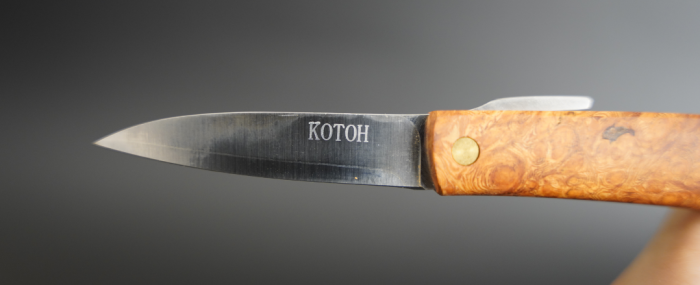
Inspired by his passion for fishing and foraging, Kotoh’s knives are designed to be lightweight, compact and practical for everyday carry and outdoor use. Each knife is individually handcrafted, combining traditional Japanese craftsmanship with modern materials and precision engineering.
His defining trait is his selection of handles, which are often sculpted from a single piece of carefully selected premium woods, including Black Persimmon, Burma Padauk, Ironwood, Quince and Japanese Cedar (Sugi), with some models featuring beautiful stag horn accents. Blades are crafted from high-performance steels such as VG-10, D2 and 8A, hardened to approximately 60 HRC for excellent edge retention and sharpness.
Every knife features adjustable hardware, allowing the opening friction to be finely tuned to the user’s preference. As each piece is handmade, every knife has its own unique wood grain and character. Each knife also comes with a handcrafted leather carry pouch, and is engraved with the Kotoh name on the blade as a mark of authenticity.
Unfortunately, there are no public photos of Yoshimi Kotoh. Like many traditional Japanese craftsmen, Mr Kotoh prefers to live a private life, letting his work speak for him.
3. Miyamoto Musashi
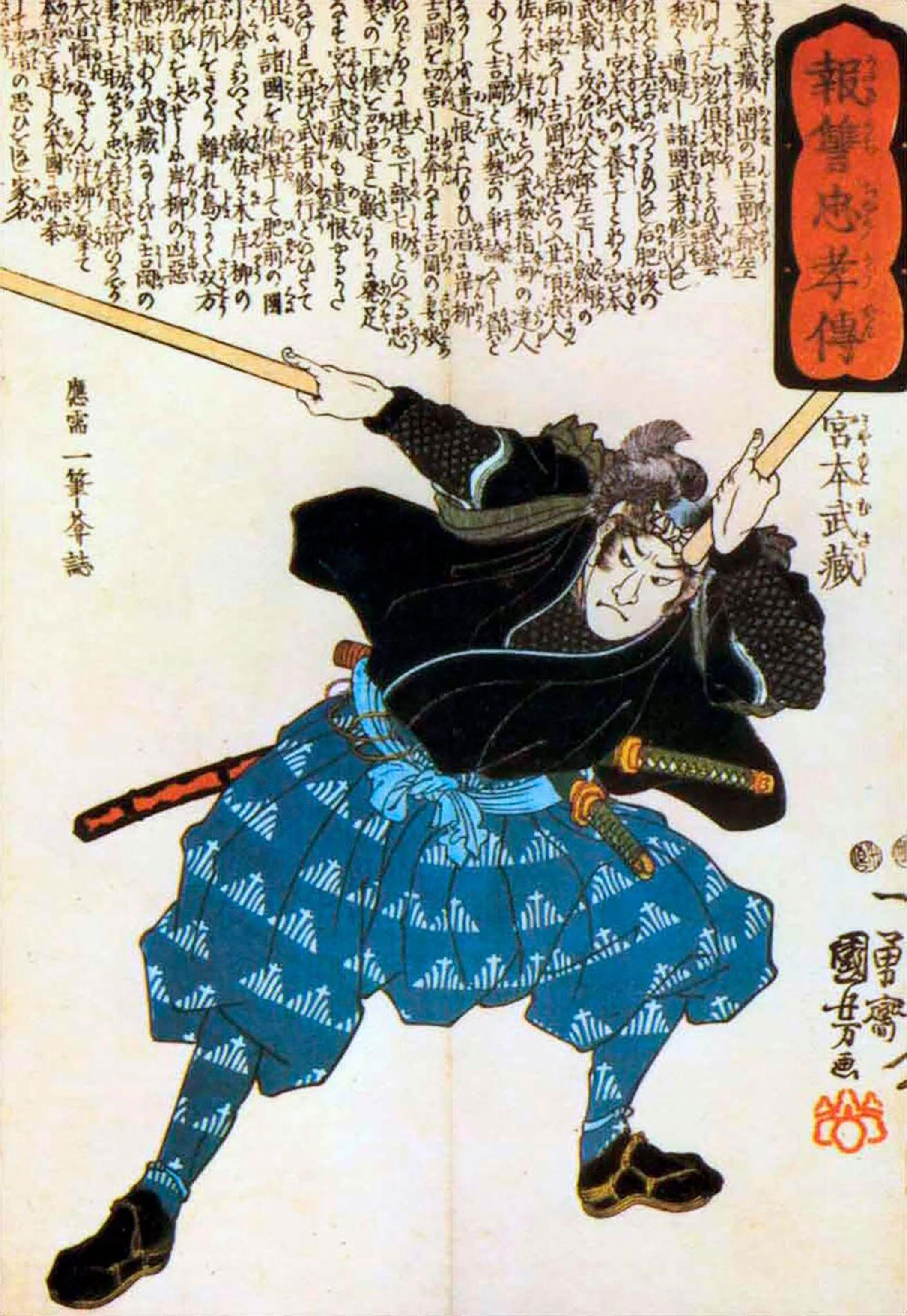
The Miyamoto Musashi name found on these traditional Japanese friction folding knives is not the name of the maker, but a tribute to one of Japan’s most legendary samurai. Miyamoto Musashi spent his final years in the former Higo Province (modern-day Kumamoto Prefecture), where he wrote the famous Book of Five Rings in 1645. The book teaches tactical strategy, adaptability and self-mastery. Using the practical mindset of sword combat to explain how to win in any kind of conflict or competition, the book is still studied today, with many using it for business, leadership or personal growth. Miyamoto Musashi’s name and image became closely associated with this style of pocket knife as a symbol of Japanese heritage and craftsmanship.
Why is it called “Musashi” and not “Higonokami”?
Although this knife follows the classic Japanese friction-folding design, you won’t find the name “Higonokami” stamped on the blade. The name is a protected trademark held exclusively by Nagao Kanekoma, the last remaining manufacturer authorised to use it. Other makers producing their own versions of this traditional style therefore use different names. For Maruyoshi, that name is Miyamoto Musashi, paying tribute to one of Japan’s most legendary swordsmen.
The Maker: Maruyoshi
Today, the Miyamoto Musashi pocket knife range is manufactured by Maruyoshi Mfg. Co., Ltd., a company founded in 1969 in Miki City, Hyogo Prefecture—one of Japan’s most renowned centres for blacksmithing and cutlery. Maruyoshi specialises in traditional Japanese edge tools, producing a range of high-quality knives and woodworking tools.
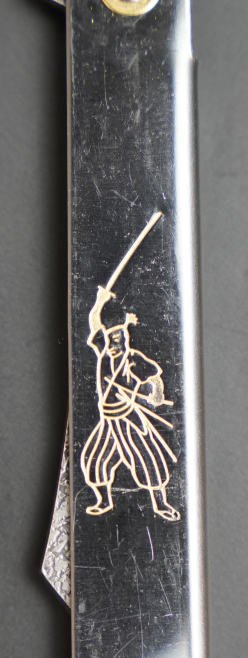
Recognisable by the engraved silhouette of Miyamoto Musashi drawing his sword on the handle, these friction folding knives combine traditional design with modern materials. Many models feature beautifully patterned Damascus steel blades, while others are available with premium finishes such as polished brass or black handles with gold kanji detailing. Mechanically, the knife relies entirely on a traditional chikiri (thumb lever) rather than a mechanical lock. The blade stays safely open simply through the friction of your grip against the lever.
Maruyoshi is primarily an export and trading company rather than a public-facing workshop, so there are very few images of the company or the craftsmen behind these knives. The knives themselves are made in private workshops, where the craftsmen value their privacy and rarely allow photographs to be taken inside their personal workspaces. Instead, the knives speak for themselves, with the distinctive Miyamoto Musashi engraving reflecting the tradition and character behind each piece.
Japanese Pocket Knives: A Tradition That Continues
These knives are worth discovering for more than just their appearance or sharpness. Behind each one is a different story of Japanese knife-making, from the long history of the Higonokami and the individual craftsmanship of Yoshimi Kotoh to the history and symbolism behind the Miyamoto Musashi range.
For anyone interested in Japanese knives, these pocket knives offer a different perspective on the craft. They show that Japanese knife-making extends far beyond the kitchen, with traditions, techniques and designs that have continued to evolve for generations.
Shop our collection of Japanese Pocket Knives here.
Comments are closed here.